Sunday, August 8, 2021

The Legacy of Ida B. Wells

Sunday Inspiration: Every Sunday, Meet the Visionaries who inspire our community.


Meet Ida B Wells

 It is unfortunate that so many young people do not know anything about Ida B Wells, her birthday is celebrated on July 16.  Activists like Mrs Wells laid the foundation for the civil rights movement including Black Lives Matter. Her courage and persistence has inspired generations of civil rights leaders. 

Born a slave in 1862, she was freed by the emancipation proclamation during the Civil War. She launched a campaign to publicize the horrors of lynching, and began writing and lecturing about it across the country. She wrote two pamphlets, entitled A Red Record: Lynchings in the United States and Southern Horrors: Lynch Law in All Its Phases, In those works, she catalogued hundreds of lynchings.

She was only 16, and attending Rust College, a historically Black college when her parents and younger brother died of yellow fever. She was forced to give up her dream of attending college in order to take care of her younger siblings. Family and friends had decided that her young sisters should be separated and put in foster care. She refused to accept that option. At 16 years old she became their caretaker. Fortunately, she was able to find work as a teacher to support herself and her five siblings.  

While teaching elementary school, she became increasingly active as a journalist and writer. She was offered an editorial position for the Evening Star in Washington, D.C., and also began writing weekly articles for The Living Way newspaper under the pen name "Iola". Under her pen name, she wrote articles attacking racist Jim Crow policies. In 1889, she became editor and co-owner of The Free Speech and Headlight, a Black-owned newspaper. She used her newspaper to publicize the lynching of Black men until a white mob destroyed and burnt her office, printing press, and newspaper; and then threatened her life.

Although she was not able to return to the south, this incident did not stop her.  On October 26, 1892, she continued to publish her research on lynching in a pamphlet titled Southern Horrors: Lynch Law in All Its' Phases. After researching and examining many accounts of lynchings blamed on the alleged "rape of White women", she concluded that Southerners cried rape as an excuse to hide their real reasons for lynchings; Black economic progress.  White Southerners were threatened by the competition from Blacks, and wanted to enforce ideas of Black second-class status in society. At the turn of the century, she watched Southern states, starting with Mississippi in 1890, pass laws and new constitutions to disenfranchise most Black people through the use of poll taxes, literacy tests and other devices. Just like today Black economic progress was a burning issue in the South, and in many states Whites worked to suppress Black progress. Wells responded by leading a crusade across the country and in Europe denouncing lynching. She was cofounder of the National Association of Colored Women's Clubs and the NAACP, her voice was heard throughout the country. She became the most prominent  Black woman of her time.


Ida B Wells was also a feminist who refused to accept the traditional role prescribed to women. She was very fortunate to meet Ferdinand L. Barnett,  a prominent attorney, civil rights activist, and journalist from Chicago who shared her views. He spoke widely against lynchings and for the civil rights of African Americans. She had what historians described as an unconventional marriage and arrangement. Her husband supported her work and assisted her. He provided her with a housekeeper so that she could devote herself to her work. He did a lot of the cooking and when she was away on speaking tours he had a nurse maid take care of the children. He also worked with her on many of her projects. Much of his work as an attorney was also involved with civil rights issues. Barnett founded The Chicago Conservator, the first Black newspaper in Chicago, in 1878. Wells began writing for the paper in 1893, later acquired a partial ownership interest, and after marrying Barnett, assumed the role of editor. After marriage she did not take his name but hyphenated their names together.  All of this was unusual for its time. Even with support, she still struggled with the multiple roles that women leaders have had to  play as wife, mother, and social and political activist. In her autobiography, she described the difficult challenge of splitting her time between family and work. She dealt with the same contemporary concerns and problems women face today. 

Wells, a devout Christian believed her work had spiritual purpose. Much of her anti-lynching writings were published by church newsletters, she also gathered there to do social work. It was in Bethel AME Church that she started a kindergarten for Black children. She and her husband founded the Negro Fellowship League (NFL), the first Black settlement house in Chicago when the YMCA refused to allow Blacks into their organizations.

She was often described as stubborn, uncompromising, feisty and difficult. She did not mind butting heads with her fellow activist about issues that were important to her. Her most important work was her investigative reporting on lynching. She was threatened many times by supremacists and government officials but she refused to let that stop her. She was fueled by her sense of righteousness and never cowed to threats on her life.

In Memphis, when the conductor of the railroad train she was riding forced her from her first class seat, she fought back, bit him, and then sued the company.

In Chicago, Ida Wells first protested the exclusion of African American people from the Chicago World's Fair, writing a pamphlet sponsored by Frederick Douglas. She stated that the Fair refused to acknowledge Black people and the tremendous accomplishments they had made since emancipation. She further asked Black people to boycott the event. She stood outside the fair handing out pamphlets.

In Washington when White suffragettes refused to allow Blacks suffragettes to march with them in the Women's Suffrage Parade, Wells ignored instructions to march with the segregated parade units and crossed the lines to march with the other members of her Illinois chapter.  She also founded the Alpha Suffrage Club of Chicago, the first African American women's suffrage organization.

While her passion, colorful personality and accomplishments stood out even among her male contemporaries like Frederick Douglas, Booker T. Washington and W.E.B. Du Bois, her story has often been left out of the history books. She was a women ahead of her times.

In 2020, Ida B.Wells was posthumously honored with a Pulitzer Prize special citation for "her outstanding and courageous reporting on the horrific and vicious violence against African Americans during the era of lynching."

Ida B. Wells' life was full of passion and inspiration, here are a few books to introduce her story to young people

Ida B. Wells: Let the Truth Be Told by Walter Dean Myers

Who Was Ida B. Wells? – by Sarah Fabiny

Ida B. the Queen: The Extraordinary Life and Legacy of Ida B. Wells – by Michelle Duster

Yours for Justice, Ida B. Wells: The Daring Life of a Crusading Journalist by Philip Dray 

Thursday, July 22, 2021

Space Jam: The New Legacy


Space Jam is back with a basketball story for a new generation. Space Jams: The New Legacy starring Lebron James released on HBO Max and movie theaters. If you know anything about the original Space Jam you probably remember it starred the legendary Michael Jordan along side Warner Bros Looney Tunes characters. This time around Lebron James stars with Bugs and pals. Similar situation but this time around the story makes more sense and is more relatable.

Flash back and a young Lebron picks up a Gameboy to play a Bugs Bunny video game but his coach scolds him, and tells him to concentrate on basketball. There might be some truth to this story as you know Lebron has been groomed as a star since high school. Flash forward and Lebron is giving his son similar advice. This is where the father and son story begins. Lebron youngest son played by  Cedric Joe has other interest mainly creating video games. But on a visit to the Warner Bros Studios father and son are forced to confront their differences by a formidable villain, AlG. Rhythm. This digital character  played by Don Cheadle is lurking in the WB servers.  His aim world domination. Some how he traps Lebron in his world where the basketball star must win a game of B ball to escape. Soon Mom played by Sonequa Martin-Green tries to come to the rescue and everyone is drawn into the chaos. Between WB character appearances and some looney tunes hijinks, a father and son storyline plays out. But unlike its' predecessor, Bugs and company take a back seat. To me that lead to more human emotion and a movie that had heart.

For kids and families who have been locked up for over a year, this will resonates. There is conflict in the family and everyone has to learn to relate and understand the other person, and just like the pandemic has caused family to come together in a special way while forcing them to separate in other ways. There's a big villain just like Covid that separates the father and son, and everyone must come together to cheer for their success.  In the end this will  affects everyone. This is a family event. Covid has made us all rethink our relationship. Adults will be tempted to compare this movie with its predecessor but young people may not be familiar with the characters. Today youngsters who spend their time on Tik Tok may not know who Wile E. Coyote is. This may also be their first introduction to Looney Tunes and other WB characters. Some parts may be scary for them but before it becomes ominous the Looney Tunes characters take it in a different direction and the laughs begins. This is a season when we need some laughter and positive direction. All in all a fun flick to see with the family, there’s a lot here Lebron, toons, some lessons learned, a bunch of WB characters and a great villain. LeBron has always done things his way and that was his message, be yourself, and family comes first but along the way have fun and get looney.

Kenge Matthews-Henry


Sunday, June 27, 2021

Meet The Grandmother of Juneteenth


Sunday Inspiration: Every Sunday, Meet the Visionaries who are inspiring our community.


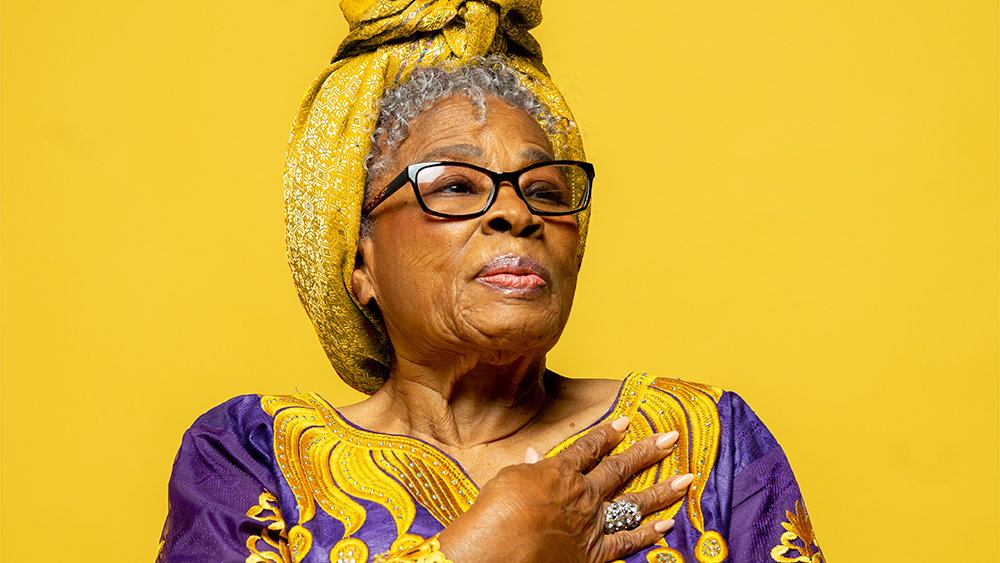
Meet Mrs. Opal Lee

While watching the signing ceremony making Juneteenth a federal holiday, some may think that the path to victory was easy. Yet we know that nothing has come easy for us in this country. Black achievement has never come without a struggle So young people not only need to hear the history of slavery and Juneteenth but how it became a federal holiday. This is the story of Opal Lee and others whose resolve and determination have made this federal holiday a reality. Opal Lee is considered to be "The Grandmother of Juneteenth." Through  her consistent effort And determination, we now have a new national holiday. 

Her story like many African-Americans is triumph over adversity. As a young child she celebrated Juneteenth with her family. However, in 1939 the day which should have been a day of joy and celebration for her family became a day of tragedy. Her family had just bought a new house  in Fort Worth, Texas but instead of enjoying this milestone, she was forced to watch as a mob of white supremacists vandalized and set fire to her family's home. Helplessly, she and her family watched their home burn to the ground as police stood by, doing nothing to stop the violence. The trauma of that day stayed with her throughout her life.   She has said that the trauma of this family experience inspired her desire to make this a holiday. She explained it this way"the fact that it happened on the 19th day of June has spurred me to make people understand that Juneteenth is not just a festival"

Her family lost everything that day but it did not stop them from rebuilding their home, She  went on to get her masters degree and worked as a teacher and counselor for many years. Following her retirement from teaching in 1976, she became an activist involved in Fort Worth community causes. She helped found the Tarrant County Black historical and genealogical Society. She organized the Fort Worth annual Martin Luther King Jr. celebration, Black History Month and Juneteenth celebration. During the 1980s, she started a tradition of bringing Fort Worth city leaders on an annual bus tour through economically depressed areas of Fort Worth, pointing out landmarks important to the cities' minority communities. 

For decades she campaigned to make Juneteenth a federal holiday. She promoted the idea by leading 2.5 mile walks each year in over ten cities, representing the 2.5 years it took for news of the emancipation proclamation to reach Texas. At the age of 89, she went to Washington DC to petition for making Juneteenth a federal holiday. She even promoted a petition to change.org. Finally this June 2021, at the age of 94, her dream was finally realized when Congress passed a bill to make Juneteenth a federal holiday and President Biden signed it into law. She was an honored guest at the bill signing ceremony and sat in the front row receiving a standing ovation. Both President Biden and Vice President Kamala Harris praised and acknowledged her many years of activism. This year for the first time she was able to celebrate Juneteenth as a national holiday and make her 2.5 miles walk as a victory walk. 

She acknowledges that this is only a symbolic step towards solving the racial divide but now young people will learn the history of slavery and the story of Juneteenth.  Holidays can bring us together as a family and a community, open up discussions, and energize us to continue to fight for justice. Manifesting black joy it's also a very important part of our survival and resilience.

Monday, June 21, 2021

Viewing African American History Through Children's Eyes

 The Civil Rights Movement was a pivotal moment in American history. Children need to learn about  this history in order to understand what is going on today. There are two exhibits across the country that invite young people to explore Civl Rights and African American history. Check them out if you are near them.


The Eric Carle Museum of Picture Book Art at 125 West Bay Road, Amherst, MA 0100  presents Picture the Dream: The Story of the Civil Rights Movement through Children's Books. This exhibition is the first of its kind to delve into the historic events, people, and themes of the civil rights movement as told through picture books. Visitors can see more than 80 artworks on view—ranging from paintings and prints to collages and drawings—by 41 artists. Picture the Dream evokes the power and relevance of an era that shaped American history and continues to reverberate today.  Exhibit is open until July 2.

“Great picture books prompt great conversations,” says Alexandra Kennedy, executive director at The Carle. “What better way for parents and teachers to introduce the difficult history of civil rights than through stories about the people who fought for equality? We believe the powerful illustrations in Picture the Dream will inspire visitors of all ages to ask hard questions and look anew at issues of equity and justice.”


Mentor Public Library’s Main Branch in Mentor Ohio is hosting a special exhibition this summer that highlights the art found within African-American children’s picture books. Telling A People’s Story: African-American Children’s Illustrated Literature includes 130 pieces of art from 33 artists from 95 books and spans 50 years of creativity. The featured artists include Caldecott medalists and honorees like John Steptoe, Leo and Diane Dillon, Javaka Steptoe, Jerry Pinkney and E.B. Lewis. Across 12 panels, the exhibit follows the history of a people from African origins to slavery and segregation through the Harlem Renaissance, Great Migration, Civil Rights Era and to modern times.

Telling A People’s Story uses paintings, pastels, drawings and mixed-media illustrations to celebrate the complex and diverse African-American experience through a lens intended for children and younger readers. The exhibition is free to enjoy from June 3 to Aug. 29 in the lobby of MPL’s Main Branch. All are invited to see it. Kids, ages 12 and younger, can win a small prize by reading the books highlighted in the exhibit. Their address is 8215 Mentor Ave, Mentor, Ohio 44060, their phone is 440-255-8811.

Here are a few of the books featured in the exhibition, Picture the Dream for parents interested in sharing the stories with their children  

Sit-In: How Four Friends Stood Up by Sitting Down by Andrea Davis Pinkney, illustrated by Brian Pinkney  

Hidden Figures: The True Story of Four Black Women and the Space Race by Margot Lee Shetterly, illustrated by Laura Freeman  

A Place to Land: Martin Luther King Jr. and the Speech That Inspired a Nation by Barry Wittenstein, illustrated by Jerry Pinkney  

If a Bus Could Talk: The Story of Rosa Parks written and illustrated by Faith Ringgold  

My Daddy, Dr. Martin Luther King, Jr. by Martin Luther King III, illustrated by A.G. Ford  

Parker Looks Up: An Extraordinary Moment by Parker and Jessica Curry, illustrated by Brittany Jackson  

Child of the Civil Rights Movement by Paula Young Shelton, illustrated by Raul Colón  

I Have a Dream by Dr. Martin Luther King Jr., illustrated by Kadir Nelson  

Sunday, June 20, 2021

Happy Father's Day!

 The Dad Gang Honors Black Fatherhood With 2nd ‘March of Dads' in NYC


This Father's Day Weekend, The Dad Gang appeared across New York City with hundreds of strollers to recognize and support dads of color. Their non-profit Random Acts of Dadness, teamed up with Scotch Porter to give brand new strollers to dads all across the city.

"We want to change that fact people thought we were missing in action or uninterested in our children," said Sean Williams, founder of The Dad Gang. "What we want to accomplish here is to change that narrative but also empower dads to be the best dads they can be."

On Father's Day, a stroller brigade of Dads showed up at Brooklyn's Prospect Park for  the second annual, March of Dads.  Fat Joe, Bronx rapper and Grammy winner made a special appearance at the "Dope Dad" rally held before the march.  And their effort to change hearts and minds continues. This is the best way to celebrate Father's Day.

Happy Father's Day!

Saturday, June 19, 2021

Happy Juneteenth!


We must learn from our history. We must teach our children our history because it is part of our history as a nation. Today is a day of celebration. It is not only a day of pride. It is also  a day for us to affirm and rededicate ourselves to action.

Kamala Harris

In 2019 I wrote,  'We can only imagine the joy, jubilation and trepidation of our  ancestors on June 19, 1865  when Major General Granger rode into Galveston, Texas and informed everyone that slavery was abolished.  We know that it left enough of an impression that the day is still commemorated today. Juneteenth has become the independence day for African Americans.

One of the first things that the newly freed slaves did was to thank God and begin looking for family.  In that spirit Juneteenth has continued to be a day of thanksgiving, prayer service, bringing together family, connecting with the past and celebrating our accomplishments."

Now after a year of protest and strife, Juneteenth, the holiday marking the end of slavery has become a federal holiday. By unanimous consent, the Senate approved legislation designating June 19, or Juneteenth, as a federal holiday to commemorate the end of slavery in the U.S.  Under the legislation, the federal holiday would be known as Juneteenth National Independence Day.   The bill then headed to the House of Representatives, where its passage was assured, then on to President Biden’s desk for signature into law. Although the holiday is symbolic, it is hoped that this will be a catalyst for addressing the systemic problems of racisms. Hopefully, children will learn the story of Juneteenth in their homes, and schools will provide a more accurate history of Black people in America.

Many thanks to Opal Lee who has lobbied for decades to make Juneteenth a national holiday. 

Google commissions artists to create doodles for special events like Juneteenth, learn more about Rachelle Baker on their site.

Today’s Doodle for Google, illustrated by Detroit-based guest artist Rachelle Baker, honors Juneteenth,  celebrating the liberation of Black enslaved people in the United States. On this day in 1865, enslaved people in Galveston, Texas received news of the Emancipation Proclamation, an executive order that mandated the end of slavery in Confederate states during the American Civil War. 

The Doodle artwork for Juneteenth celebrates joy within the Black community, as well as the perseverance foundational to this journey toward liberation. With each letter, the Doodle transitions from historical Juneteenth parades to modern-day traditions such as education through storytelling, outdoor gatherings with family and friends, and commemorative festivals and parades. These scenes of celebration and community are brightened by bluebonnets—the state flower of Texas—and forget-me-nots that are layered upon backgrounds of decorative ironwork commonly found on buildings throughout the southern states. This ironwork highlights the often forgotten contributions made by enslaved Black Americans and symbolizes their strength and resilience. 

Baker further explains her inspiration, "I looked at tons of photos and art illustrating some of the first ever Juneteenth celebration, as well as celebrations, parades, and festivities from recent years. I also read about specific symbols, foods, colors, and activities that were and continue to be important in celebrating and commemorating this holiday."

While Juneteenth recognizes over a century and a half of progress, it also reminds Americans to continue to build a more equitable and unified nation. 

Happy Juneteenth!


Sunday, June 13, 2021

Louisiana Has Its' First Black-Owned Birth Center

Sunday Inspiration: Every Sunday, Meet the Visionaries who are inspiring our community.


Meet Shatamia Webb 

Why does the richest country in the world also have one of the highest maternal and infant death rate? And why are African American women and children's mortality rate the highest. Today we have a new generation of healthcare workers who are trying to address this problem. 

In Louisiana, Shatamia Webb, a midwife is providing mothers with a safe haven. As she says in a KATC News interview that one of her biggest fears, when it came time for her to give birth, was arriving at the hospital and not being able to come home so she decided to have both of her children at home.

Now, she’s on a mission to help all future parents not only feel more confident when it comes to delivering their bundle of joy but informed about the options they have when it comes time to do so. As a midwife, Webb has conducted home births for the last four years. She and her staff believe, it’s all about mothers knowing “what to expect going in at every stage of the journey.” Recently she announced that in late July she will be opening the Baby Catcher Birth Center in Lafayette, which will become the first Black-owned freestanding birth center in Louisiana. 


The CDC reports that Black women are three times more likely to die during childbirth, and Webb is committed to changing this narrative with the Baby Catcher Birth Center. Staff at the center will provide insights for mothers on topics that include breastfeeding education, nutrition, labor support, and more. Plus, she says that mothers will be seen throughout their whole pregnancy along with check-ins during prenatal and postpartum periods. Benefits of the center will also include more individualized care along with a different approach when it comes to giving birth.

Webb also adds that mothers will be able to have as many people as they want with them during the time of delivery and the center will have two suites for two families. The center is located near Lafayette General Hospital just in case there are any complications.

“This is what I love,” said Webb in her interview “I couldn’t see myself doing anything else.”  For more information  or to support her project check her facebook.