Monday, April 27, 2020

Why We Stay Home


The African American community has taken a serious blow from the Coronavirus pandemic.  Explaining what is happening to young  children can be difficult but two Black Medical School students have written a free e-book to help clarify Covid-19 to our little ones! 

In this new e-book, young children will meet Suzie and Millie. Suzie is really excited to be able to stay home with her Mommy, Daddy, and older sister Millie! When Suzie expresses this to Millie, she explains to Suzie why they have been staying home with a quick lesson on Coronavirus.

Our thoughts and prayers are with you and your family. We hope you are protecting your family and staying safe.

Parents can download the e-book for free

If you can support the authors please do!  They are taking donations to keep this free, so contributions are being accepted.

Download this FREE e-book

Wednesday, April 22, 2020

Happy Earth Day 2020

Haitian Born Artist and Naturalist James Audubon

After 50 Years of celebrating Earth Day we see pollution rising and the earth replenishing itself. While a pandemic has made us realize we have a lot to learn about ourselves and the planet we live on, let us celebrate that change is possible.

Monday, April 20, 2020

National Domestic Violence Hotline


During this time when home should be a place of safety and  refuge many women and children maybe experiencing violence and fear for their safety. If you or anyone you know is experiencing mental or physical abuse please reach out for help for your own safety. 

The Hotline provides lifesaving tools and immediate support to empower victims and survivors to find safety and live free of abuse. They also provide support to friends and family members who are concerned about a loved one. Resources and help can be found by calling 1-800-799-SAFE (7233). 

If it’s not safe for you to call, or if you don’t feel comfortable doing so, another option for getting direct help is to use our live chat service here on this website. You’ll receive the same one-on-one, real-time, confidential support from a trained advocate as you would on the phone. Chat is available every day from 24/7/365.

https://www.thehotline.org/
1-800-799-7233

Wednesday, February 26, 2020

What Can We Tell Children About Black History

Ruby Bridges
Norman Rockwell - The Problem We All Live With


Often young students think that they can't relate to history. They believe history is the story of another time and another generation. Maybe, if they realized the important role Black children and young adults have played in the formation of  American history they would be more interested. American history would be very different without the pivotal role played by young Black children.

During slavery children started working as early as six years old.  They along with their parents worked in the fields and homes providing  the free labor that allowed this country to develop into the economic power that it is today. 

After slavery educating children to read and write became a priority. Former slaves set up schools where young people were taught and in turn taught others. For these young people education and knowledge became the tool for social advancement.  Today children need to understand how important education was for these young people and how eager they were to learn. Today children need to be reminded that education is still the key to our advancement.

We can't talk about the Civil Rights Movement without mentioning the participation of young people like Ruby Bridges and Lynda Blackmon Lowery. Ruby Bridges has become an iconic figure representing the young children who integrated schools after Brown vs The Board of Eduction made segregated schools unconstitutional. Lynda Blackmon Lowery, author of "Turning 15 on the Road to Freedom," was  one of the youngest participants in the 1965 Selma to Montgomery Voting Rights March. Several years before she had heard Dr. Martin Luther King, Jr. speak and joined the movement at a very young age. There she learned the principles of non violence, and was beaten during the Selma to Montgomery March. They were not alone. There were many young people across the country stepping out against segregation and racism. Young adults sat at lunchroom counters, integrated classrooms. marched, and were beaten and jailed for their convictions.

Black History Month offers an opportunity for young people to learn about these courageous people who at a very young age made a difference and paved the way for their generation.

What Can We Begin To Tell Children About Black History Month


Celebrating the African American Child

Welcome to Black History Month 2020

What Can We Begin To Tell Children About Black History Month

Black  History Month was created  as Negro History Week in 1925 by Carter G. Woodson,  a Harvard-trained historian,  and founder of the Association for the Study of Negro Life and History (ASNLH).  This was during a time when African American were told that they had no history or culture.  He hoped to raise awareness of African American’s contributions to civilization and chose the week that encompassed the birthdays of both Abraham Lincoln and Frederick Douglass. His efforts not only enkindled a fire and interest by educators and scholars but the creation of Black history clubs. By 1970, the week had become Black History Month.

Although Black History Month is only one month, we celebrate our heritage 365 days of the year.  Each time we step out and proclaim our rights as human  beings we are a part  of a grand human history story.

February gives us the opportunity to honor those that have stood strong with purpose and changed the face of this country. Those who pushed us to be more, and to take fear into our own hands like Harriet Tubman who carried a rifle and no one turned back.  She was fearless and never lost a fugitive slave.  Our history reveals people who saw the light no matter how dim the circumstance.

Our history is the foundation on which we stand. Our ancestor speak to us through our history, and their dreams and hopes come alive.

Tuesday, January 28, 2020

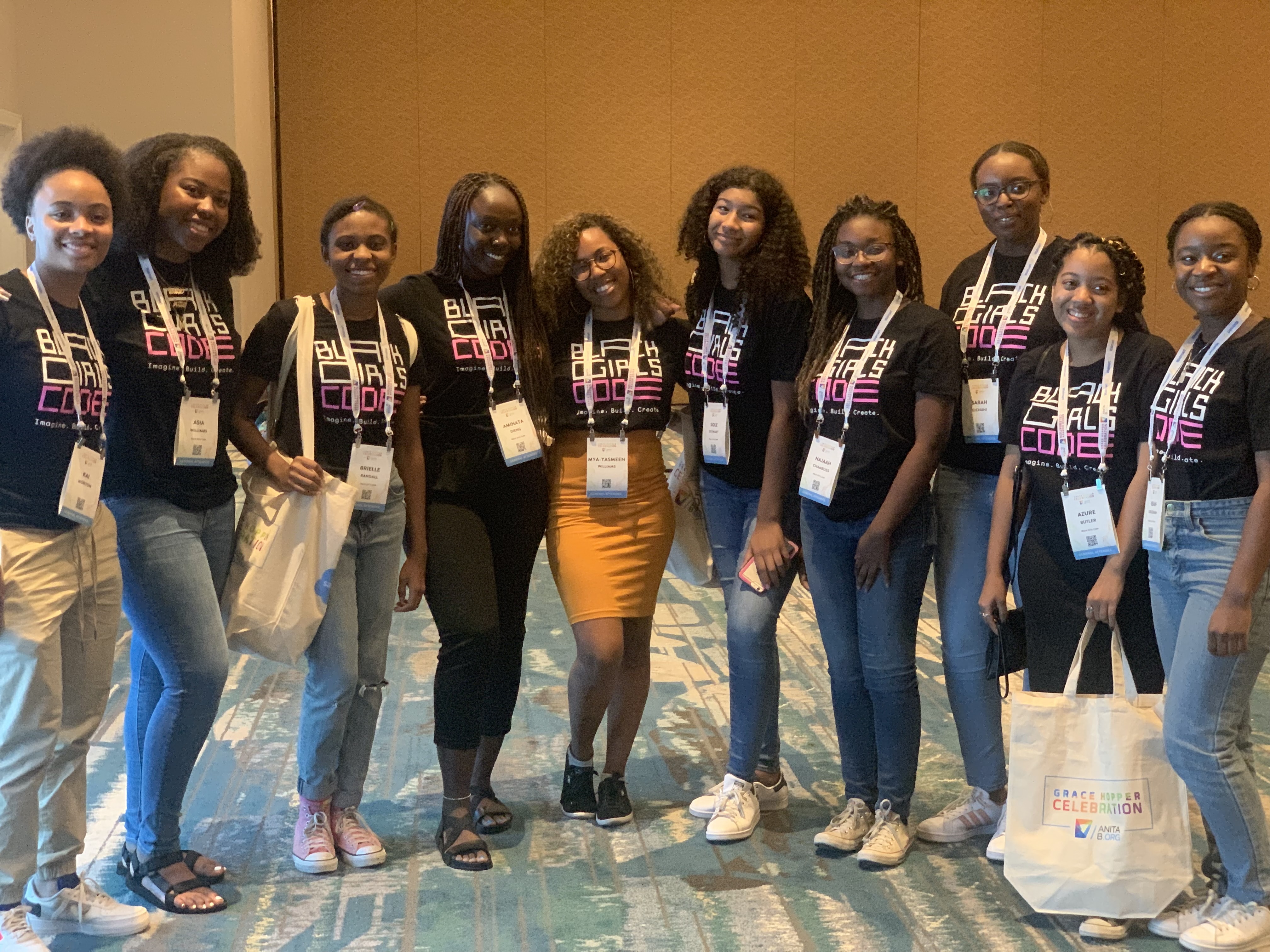
Grace Hopper Celebration 2020


Grace Hopper Celebration 2020


Black Girls Code has shared the following information about Grace Hopper Celebration 2020.  Black Girls Code's goal is to build the largest pipeline of future female engineers in the United States. To support their work, learn more about their organization and become part of their cohort visit their site.  


Are you in college and pursuing a future in computing? Do you want to attend the 2020 Grace Hopper Celebration (GHC)--the world’s largest gathering of women technologists?

Apply for a GHC Scholarship today! GHC Scholarships are fully funded, covering registration, travel to/from GHC, and hotel.

In 2020, alumnae of our programs will have an opportunity to be part of a unique GHC Scholarship cohort that receives access to special programming and events leading up to and at GHC. When completing your application, please make sure to select Black Girls CODE. Doing so will make you eligible to be part of our cohort if you’re awarded a scholarship. 


Grace Hopper Celebration is the world's largest gathering of women technologists. It is produced by AnitaB.org and presented in partnership with ACM.  GHC 20 will be held from Sep. 29—Oct. 2 in Orlando, FL.

 To apply and get more information visit https://ghc.anitab.org/


Tuesday, October 1, 2019

Harriet in Theaters November


"It seems impossible until it is done"   Nelson Mandela

Harriet Tubman is one of my favorite sheroes. As a conductor for the Underground Railroad, she did the impossible lifting hundreds out of slavery while never losing a passenger. Hearing the story of this visionary always gives me chills.  In November families have an opportunity to check out a new film about her life, and be inspired by this woman of courage and faith. Harriet starring Cynthia Ervio will be released to theaters on November 1.